 Support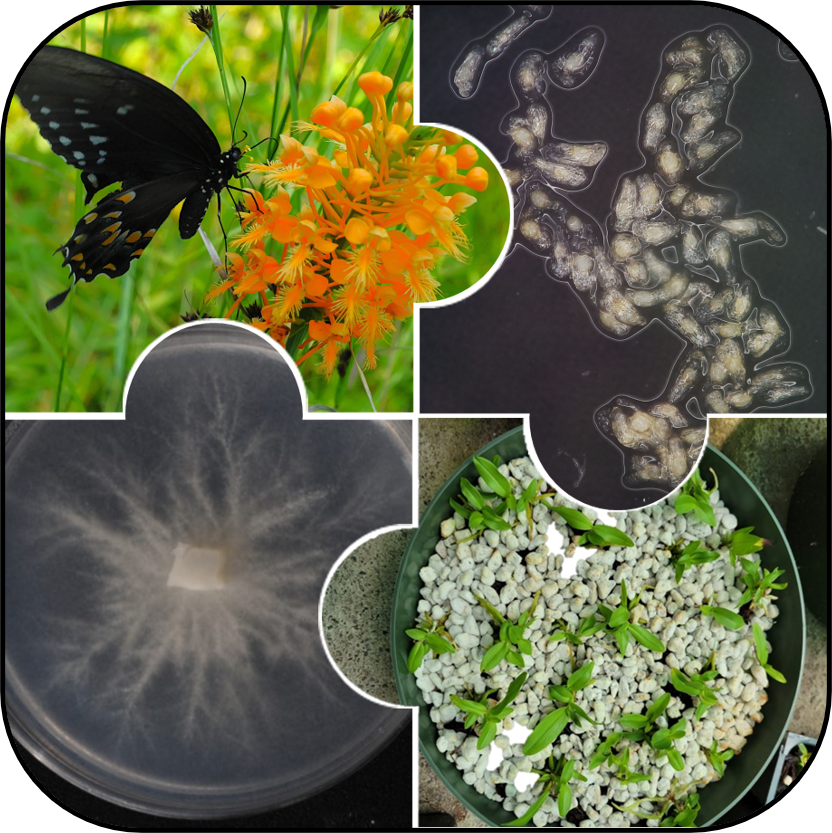
The ecology of orchids is complex - the key elements are like the pieces of a puzzle. We are still seeking much of the information needed to develop protocols for sustainable propagation, conservation, and restoration for the vast majority of species native to North America. NAOCC and our partners have been making steady progress towards understanding the ecology of each species. Collaborators, like Dr. Larry Zettler and his students in the Orchid Recovery Program at Illinois College, are actively involved in this research.
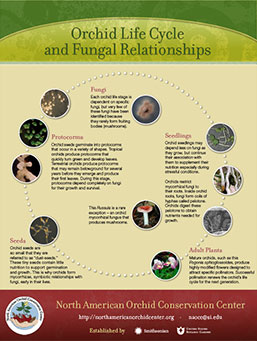
Specialized habitats, pollinators, and even fungi play a key role in an orchid’s life cycle. This is why orchids are a key indicator of the overall health of the environment—and why they are so vulnerable to cycle disruptions. Elements of the orchid’s life cycle are shown below.
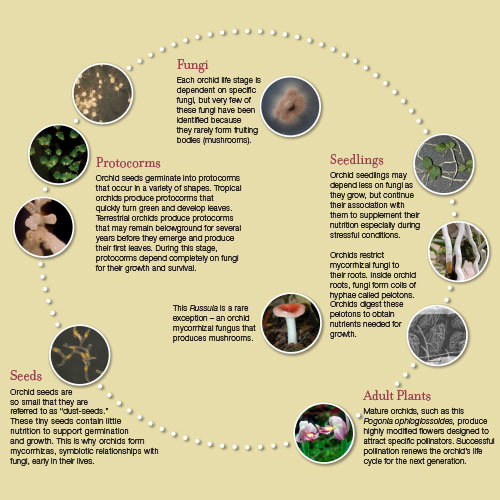
The orchid lifecyle has a series of stages. Fungal and pollinator relationships are important in different parts of the lifecycle.
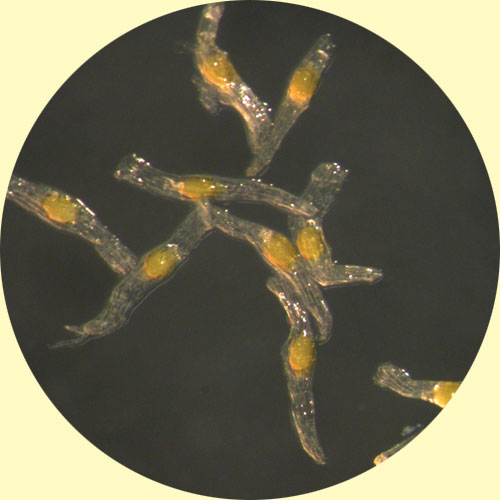
Orchid seeds are so small that they are referred to as “dust-seeds.” These tiny seeds contain little nutrition to support germination and growth. This is why orchids form mycorrhizal associations - symbiotic relationships with fungi - early in their lives.
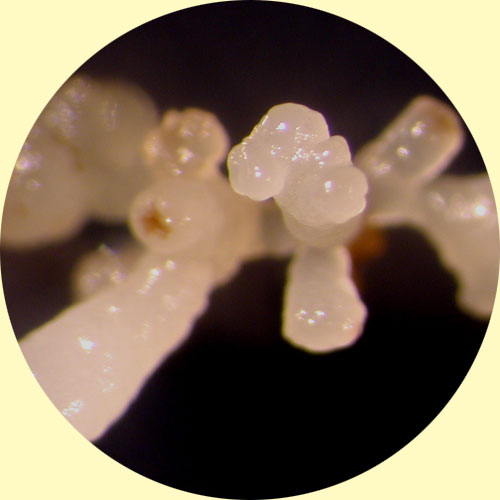
Germinated seeds are called protocorms, which can have a variety of shapes such as this Corallorhiza odontorhiza.
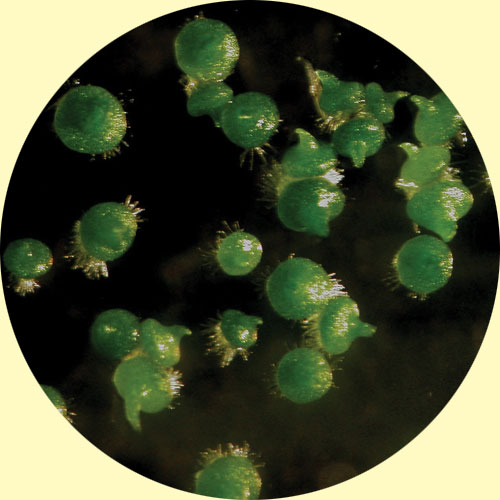
In the tropics, orchid protocorms, such as these Encyclia tampensis from Florida, quickly turn green and produce leaves.
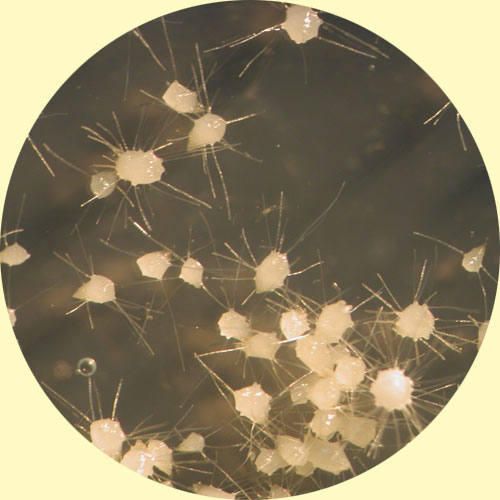
Further north, terrestrial orchids, such as Goodyera pubescens, produce protocorms that may remain below ground for several years before they emerge and produce their first leaves. During this stage, protocorms depend completely on fungi for their growth and survival.
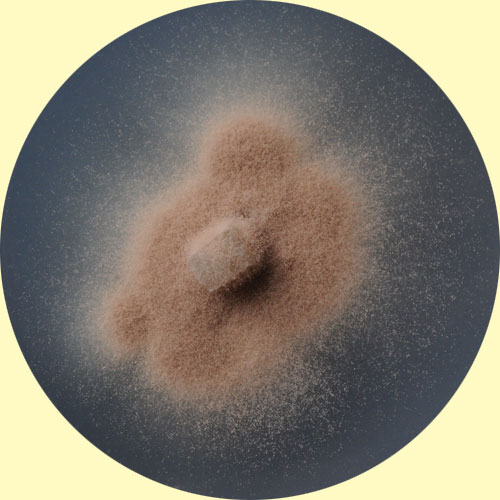
Each orchid life stage is dependent on specific fungi, but very few of these fungi have been identified because they rarely form fruiting bodies (mushrooms).
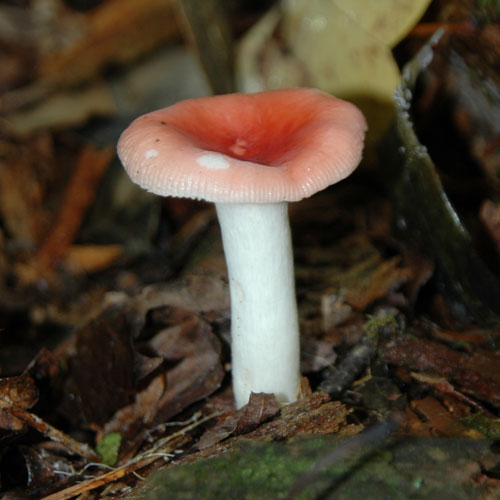
This large and brightly-colored Russula is a rare exception – an orchid mycorrhizal fungus that produces mushrooms.
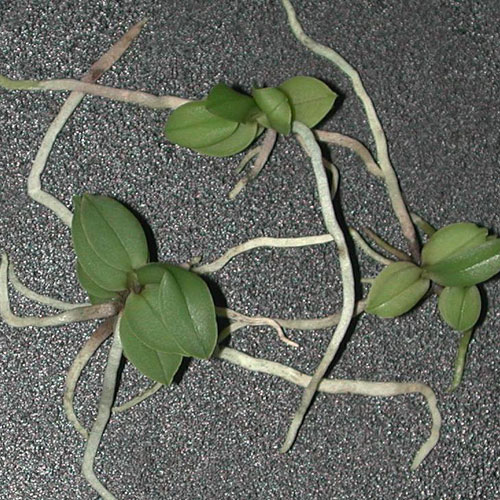
As orchid seedlings grow, they may depend less on fungi, but continue their association with them to supplement their nutrition especially during stressful conditions.
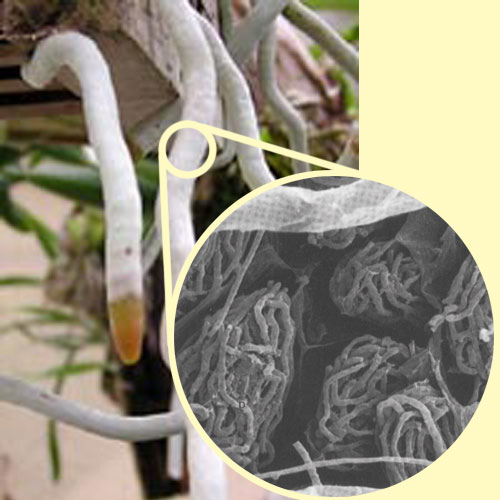
Orchids restrict mycorrhizal fungi to their roots. Inside orchid roots, fungi form coils of hyphae called pelotons. Orchids digest these pelotons to obtain nutrients needed for growth.
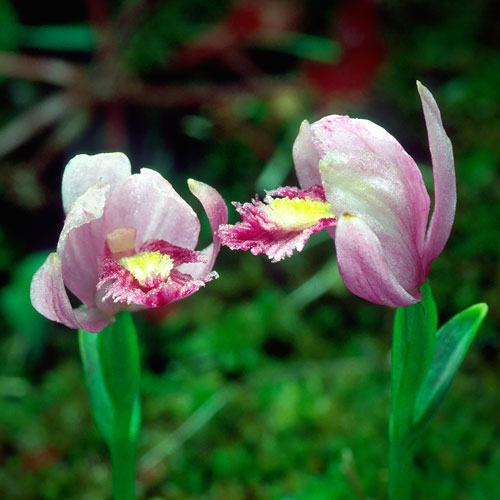
Mature orchids, such as this Pogonia ophioglossoides produce highly modified flowers designed to attract specific pollinators. Successful pollination renews the orchid’s life cycle for the next generation.
North American Orchid Conservation Center (NAOCC)
c/o Smithsonian Environmental Research Center
647 Contees Wharf Road
Edgewater, MD 21037-0028