 Support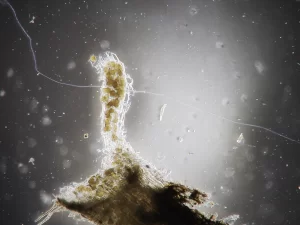
NAOCC has an ongoing, continental-scale project to collect leaf, root, and seed specimens from orchid populations for genetic analysis, mycorrhizal fungal identification, and germplasm preservation. This project actually began years before NAOCC’s founding, and subsequently ramped up when NAOCC’s formal collections protocols and tracking systems were put in place. These specimen collections have been growing, and we now have one of the world’s largest collections of orchid mycorrhizal fungi (OMF) live cultures – many of which are “new to science” and as yet unidentified.
In 2024, in collaboration with the United States Botanic Garden, we began a deep dive into identifying all of the fungi in our growing collection in the Smithsonian Environmental Research Center (SERC) Plant & Molecular Ecology Lab using DNA sequencing. In the past, we generally conducted fungal identification only for funded projects. Thanks to a generous recent contribution, we now have funding to identify all of the fungi in our collection. We can use this information to determine what fungi to test in germination and propagation trials, to identify sites for reintroduction, and to gauge the progress of restoration efforts.
This effort has included identifying fungi from our culture collection, as well as fungi from the orchid root remnants left from attempts to culture fungi. Double-checking root remnants allows us to ensure that the fungi we culture represent what is in the orchid roots, rather than just the easiest-to-culture fungus that was present. It also allows us to identify all of the orchid mycorrhizal fungi, even fungi that cannot be cultured.
We’re still working through our collection. At this point we have generated over 1900 sequences from NAOCC collections and combined them with the 700+ sequences from studies already published, thus identifying the mycorrhizal fungi associated with more than half of the native orchids in the US and Canada. Over half of the orchid species from which we have samples appear to associate with very specific fungi, with little difference in fungi among sites. For these species, we have a good idea of what fungi they need. Orchids with less specific requirements often use different fungi in different sites or sometimes multiple fungi within sites. This finding suggests that generalist orchids can be supported by multiple fungi; however, often only one potential host fungus is present at a site. Some orchids exhibit clear patterns that may imply subspecies or geographic differences. Others are more complex.
There is a lot more to learn, but we can already use this information to determine whether appropriate fungi are present at a possible restoration site. Additional work will be needed to determine whether all of the fungi found in adult orchid roots, or only some of them, are the species that are required to support seed germination. As we continue to work through sequencing fungi from the rest of the collection, we are using the information we have so far to target species and locations for sample collection next spring and summer. Stay tuned as this continental-scale project progresses.
North American Orchid Conservation Center (NAOCC)
c/o Smithsonian Environmental Research Center
647 Contees Wharf Road
Edgewater, MD 21037-0028